
 t cohesive and brilliant records. There are tangible bumpers (the record is buttressed by squealing/wheezing interpretations of Henry Mancini's music for Orson Welles' Touch of Evil), so by that aspect there's a tangible center. And taken as a whole, the record contains all the characteristics that have made the Sheffield group such an influential entity when it comes to electronic music of the untethered, experimental variety that isn't afraid to shake its tail a little. Unlike a fair portion of CV's studio output, Red Mecca features no failed experiments or anything that could be merely cast off as "interesting." It's a taught, dense, horrific slab lacking a lull. Dashes of Richard H. Kirk's synthesizer are welded to Chris Watson's tape effects for singed lashes of white noise, best heard on the lurching "Sly Doubt" and the jolting "Spread the Virus." Throughout, Mallinder's sinister jibber jabbering punctuates the high-pitched menace. What he's ranting about is rarely obvious, as the clarity of his voice is often obstructed by the tape effects, synth work, and other random whip-cracks (Watson's periodic surges of organ are another treat). Judging from his irritated tone, odds are the lyrics have little to do with bunnies jumping over dandelions or anything nearing pleasant -- it's that lack of definition that makes things all the more unsettling. Several tunes have a thick rhythmic drive. The instrumental "Landslide" is painfully short at two minutes, with a bopping machine beat and barely perceptible vocal samples that dart between the left and right channels. A grainy programmed rhythm and Kirk's sickly guitar manglings dominate the sleazy "Split Second Feeling." Sick, searing, engrossing. Along with 2X45 and The Living Legends, this is their best offering.
Wednesday, April 26, 2006
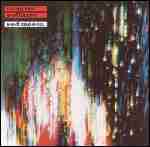
Cabaret Voltaire - Red Mecca (1981)
It isn't without reason that Red Mecca is often referred to as one of Cabaret Voltaire's mos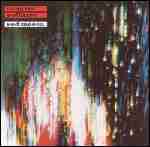 t cohesive and brilliant records. There are tangible bumpers (the record is buttressed by squealing/wheezing interpretations of Henry Mancini's music for Orson Welles' Touch of Evil), so by that aspect there's a tangible center. And taken as a whole, the record contains all the characteristics that have made the Sheffield group such an influential entity when it comes to electronic music of the untethered, experimental variety that isn't afraid to shake its tail a little. Unlike a fair portion of CV's studio output, Red Mecca features no failed experiments or anything that could be merely cast off as "interesting." It's a taught, dense, horrific slab lacking a lull. Dashes of Richard H. Kirk's synthesizer are welded to Chris Watson's tape effects for singed lashes of white noise, best heard on the lurching "Sly Doubt" and the jolting "Spread the Virus." Throughout, Mallinder's sinister jibber jabbering punctuates the high-pitched menace. What he's ranting about is rarely obvious, as the clarity of his voice is often obstructed by the tape effects, synth work, and other random whip-cracks (Watson's periodic surges of organ are another treat). Judging from his irritated tone, odds are the lyrics have little to do with bunnies jumping over dandelions or anything nearing pleasant -- it's that lack of definition that makes things all the more unsettling. Several tunes have a thick rhythmic drive. The instrumental "Landslide" is painfully short at two minutes, with a bopping machine beat and barely perceptible vocal samples that dart between the left and right channels. A grainy programmed rhythm and Kirk's sickly guitar manglings dominate the sleazy "Split Second Feeling." Sick, searing, engrossing. Along with 2X45 and The Living Legends, this is their best offering.
t cohesive and brilliant records. There are tangible bumpers (the record is buttressed by squealing/wheezing interpretations of Henry Mancini's music for Orson Welles' Touch of Evil), so by that aspect there's a tangible center. And taken as a whole, the record contains all the characteristics that have made the Sheffield group such an influential entity when it comes to electronic music of the untethered, experimental variety that isn't afraid to shake its tail a little. Unlike a fair portion of CV's studio output, Red Mecca features no failed experiments or anything that could be merely cast off as "interesting." It's a taught, dense, horrific slab lacking a lull. Dashes of Richard H. Kirk's synthesizer are welded to Chris Watson's tape effects for singed lashes of white noise, best heard on the lurching "Sly Doubt" and the jolting "Spread the Virus." Throughout, Mallinder's sinister jibber jabbering punctuates the high-pitched menace. What he's ranting about is rarely obvious, as the clarity of his voice is often obstructed by the tape effects, synth work, and other random whip-cracks (Watson's periodic surges of organ are another treat). Judging from his irritated tone, odds are the lyrics have little to do with bunnies jumping over dandelions or anything nearing pleasant -- it's that lack of definition that makes things all the more unsettling. Several tunes have a thick rhythmic drive. The instrumental "Landslide" is painfully short at two minutes, with a bopping machine beat and barely perceptible vocal samples that dart between the left and right channels. A grainy programmed rhythm and Kirk's sickly guitar manglings dominate the sleazy "Split Second Feeling." Sick, searing, engrossing. Along with 2X45 and The Living Legends, this is their best offering.
Subscribe to:
Post Comments (Atom)
Popular Posts of the Week
-
This isn't an album or an album review.Modern music followers,lovers,or haters:)Today is my birthday.And I want to share my cake with y...
-
Unearthed is, before anything else, a monolith. It's a whopping five CDs of material, four of which are previously unreleased. The fir...
-
 Rating:5/10 I was searching about this record. First of all the album title isn't rare, there are lots of Strength In Numbers by other a...
 -
 New Goldfrapp album Seventh Tree starts slowly. Like watching a flower growing, the songs play softly. It sounded quite dull at my first l...
 -
The Clash was one of the most successful British punk rock groups that existed from 1976 to 1986. They incorporated punk, reggae, rockabil...
-
 Rating: 4 /10 I don't find The Libertines and The Strokes as influential bands but good bands. They released nice couple of albums, play...
 -
 Brooklyn based band releases their third record. I missed the voice of Yuki Chikudate, her voice once again brooding, enchanting and surpris...


 Posts
Posts


2 COMMENTS:
great post. the soundtrack to my teenage years. does anyone have 2X45? thanks.
hugely underrated band which sounds much better now than it did then... odd.
Post a Comment