Friday, March 24, 2006
Nicole Scherzinger - Don't Hold Your Breath "Video"and Lyrics
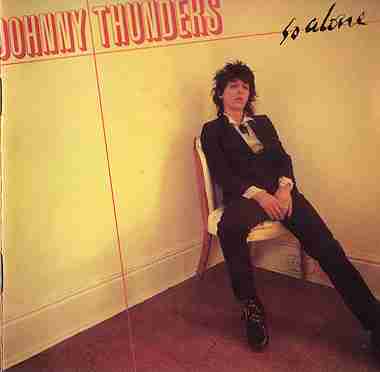
Johnny Thunders - In Cold Blood
bounced back with his first solo outing, So Alone. Featuring a veritable who's who of '70s punk and hard rock -- Chrissie Hynde, Phil Lynott, Peter Perrett, Steve Marriott, Paul Cook, and Steve Jones, among others -- the record was a testament to what the former New York Dolls guitarist could accomplish with a little focus. Much like Thunders' best work with the Dolls and Heartbreakers, So Alone is a gloriously sloppy amalgam of R&B, doo-wop, and three-chord rock & roll. Despite the inevitable excesses that plagued every Thunders recording session, Steve Lillywhite's solid engineering job and a superb set of songs hold everything together. A cover of the Chantays' classic instrumental "Pipeline" leads things off, and is a teasing reminder of what a great guitarist Thunders could be when he put his mind to it. The record's indisputable masterpiece is "You Can't Put Your Arms Around a Memory," a wrenching, surprisingly literate ballad in which Thunders seems to acknowledge that his junkie lifestyle has doomed him to the abyss. Songs like "Leave Me Alone," "Hurtin'," and the chilling title track continue the theme of life inside the heroin balloon. Fortunately, all this back-alley gloom is leavened by some memorably animated moments. "London Boys" is a scathing reply to the Sex Pistols' indictment of the New York punk scene, "New York." The funky "Daddy Rolling Stone" features the inimitable Lynott on background vocals, while the raveups "Great Big Kiss" and "(She's So) Untouchable" are terrific examples of Thunders' raunchy take on classic R&B.Tracklist
Buy In Cold Blood
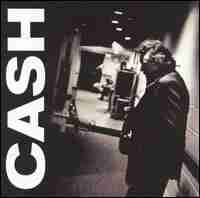
Johhny Cash - American III: Solitary Man
Man, his first studio album since being diagnosed with Parkinson's disease in 1997. While the inevitability of aging has been the downfall of many of his contemporaries, ending usually in dismissal and often in death, Johnny Cash's dark convictions and powerful presence have gone from rough hardwood to solid stone. The stark beauty of his 1994 release American Recordings and the warm, friendly collaborations on 1996's Unchained combine on this album to create two distinct moods: one of living room jam sessions with invited friends, and another of stark solo (and near-solo) songs highlighting Cash's years and stories. Like his two previous studio albums, Solitary Man is sparsely produced by Rick Rubin, and continues the themes of love, faith, and loneliness that their previous collaborations have chillingly embraced. Partnering once again with Tom Petty, the two join together on Petty's own "I Won't Back Down" and the Neil Diamond-penned title track. Cash also lays his lonesome hands on U2's "One" and reunites with fellow outlaw Merle Haggard on the stubborn "I'm Leavin' Now," which could serve as the soundtrack for the notorious photo of Cash's sneering middle finger published in Billboard after his Grammy award. These duets and well-known covers show an inviting side of Johnny Cash. But the real highlights of the album are those reminiscent of his American Recordings songs; they feature just the man and his guitar, with nothing else to clutter the story. The creaks and despair of the vaudeville song "Nobody" tell of a man who has become hardened by his solitude, while the Palace hymn "I See a Darkness" soars with the passion of a thousand gospel choirs, even though there are only two men singing...READ MORE...
Tracklist
Weezer - Make Believe
release of Make Believe made clear, Weezer leader Rivers Cuomo is an odd, ornery sort. He's a genuine rock & roll maverick, at once attracted and repelled by his star status, disappearing for long stretches at a time, often to return to college. He writes and records far more songs than whatever winds up on a final Weezer record, which are often whittled down to just 30 or 40 minutes, leaving untold numbers of songs in the vaults. What makes the situation even stranger is for as obstinate and unpredictable as he is, Cuomo does not make odd music: he's a pop songwriter fronting a hard rock band, equally enamored with big choruses and loud guitars. While each of Weezer's records has a defining characteristic -- whether it's a sound, a lyrical theme, or simply an emotional feel -- that separates it from its predecessor, each album is clearly written from the same perspective: that of a brainy misfit raised on cheap metal and new wave, whose nerdiness always kept him on the outside looking in. This was true even after Cuomo became a star, thanks in large part to how he had a gift for articulating how very awkward he felt within the constructs of a catchy, melodic, concise pop song. But as rock stars since Elvis have learned, fans are a demanding lot, especially when they identify so heavily with a specific work, as Weezer's cult did with Pinkerton, the band's second album. It flopped upon its 1996 release but became a word-of-mouth hit over the next five years, leading up to their eagerly awaited comeback, Weezer, their second eponymous album that is otherwise known as The Green Album. Appropriately for a self-titled affair, Weezer functioned as an introduction to a new incarnation of a band, one that sounded similar but had a different outlook: namely, one that was deliberately notintrospective, a conscious shift away from plaintive introspection of Pinkerton. The Green Album and its quickly released 2002 follow-up, Maladroit, were both sharply written, tightly constructed, quite excellent, and popular rock records, but that didn't stop some fans from grumbling that neither album was as affecting as Pinkerton...READ MORE...Tracklist
Buy Weezer Make believe
Tom Waits - Real Gone
eliminating one of the cornerstone elements of his sound -- keyboards -- he has also removed his safety net. With songwriting and production partner Kathleen Brennan, he strips away almost everything conventional from these songs, taking them down to the essences of skeletal rhythms, blasted and guttural blues, razor-cut rural folk music, and the rusty-edge poetry and craft of songwriting itself. His cast includes guitarists Marc Ribot and Harry Cody, bassist/guitarist Larry Taylor, bassist Les Claypool, and percussionists Brain and Casey Waits (Tom's son), the latter of whom also doubles on turntables. This does present problems, such as on the confrontational opener, "Top of the Hill." Waits uses his growling, grunting vocal atop Ribot's monotonously funky single-line riff and Casey's turntables to become a human beatbox offering ridiculously nonsensical lyrics. It's a throwaway, and the album would have been better had it been left off entirely. But it's also a canard, a sleight-of-hand strategy he's employed before. The jewels shine from the mud immediately after. The mutated swamp tango of "Hoist That Rag" has stuttered clangs and quakes for drums, decorated by distorted Latin power chords and riffs from Ribot, along with thundering deep bass from Claypool. On the ten-plus minute "Sins of My Father," Cody's spooky banjo walks with Taylor's low-strung bass and Waits' shimmering reverbed guitar as he ominously croons, revealing a rigged game of "star-spangled glitter" where "justice wears suspenders and a powdered wig." It's part revelation, part East of Eden, and part backroom political culture framed by the eve of the apocalypse. It's hunted, hypnotic, and spooky.
John Coltrane - Coltrane
as First Trane. The classic of the set is the emotional and eerie "While My Lady Sleeps," but all six selections (including "Violets for Your Furs") are notable for tenor saxophonist John Coltrane's passionate solos. This was his first full session as a leader (as opposed to heading jam-session dates), and it also features either Mal Waldron or Red Garland on piano, bassist Paul Chambers, drummer Al "Tootie" Heath, and on some numbers trumpeter Johnny Splawn and baritonist Sahib Shihab. As with 'Trane's other Prestige sessions, this valuable music is also available in his huge box set; recommended in one form or another.
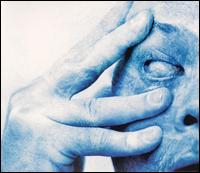
Porcupine Tree - In Absentia
Continuing in the growing commercial vein of their previous r
eleases, Porcupine Tree's In Absentia may be the most accessible release to ever spew forth from the group. Rolling electronic percussion blends with simple and solid live drumming to provide an understated backbeat as perennial Tree leader Steven Wilson pastes his complicated pop over the proceedings. Wilson's ability to bury his layered vocals in mountains of spacy electric guitar without drowning out his fragile lyrics is still a valued feature of the music, and the rare moments of clarity that his vocals display are breathtaking in their power. A reliance on a somewhat gothic heavy metal sound makes for some bizarre moments, especially when held up against his gentler material. The best example of this is the chugging "Wedding Nails," which recalls Dream Theater in its grandiose scope without utilizing the same sort of technical wizardry. But Wilson manages to bridge the gap between the various genres he utilizes, creating an environment where his haunting melodies could take a drastic turn at any minute. Porcupine Tree also continue their Radiohead fascination, although the influence is much less direct than on their last few efforts. Instead, it comes through at odd moments, like the moments of sparse instrumentation on the otherwise lush "Heartattack in a Layby." Sonically gorgeous and deceivingly complex, In Absentia has the most immediate appeal of anything Wilson has released under this moniker up to this point. By keeping the songs at manageable lengths and avoiding the avant-garde electronica flourishes of the band's early days, Porcupine Tree grow into a fully realized pop group without cutting any of the elements that also makes them an important force in the neo-prog movement.Prog-Rock/ Art RockThursday, March 23, 2006
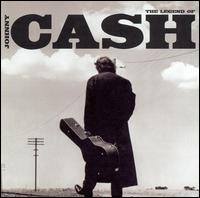
Johnny Cash - The Legend of Johnny Cash (2005)

The Legend of Johnny Cash is billed as the "first ever complete career spanning collection," which is true to a certain extent -- other collections cover territory from 1955 to 2003, but this is the first to contain everything from Sun to Cash's Rick Rubin-produced comeback recordings for American in the '90s and 2000s. Since the biggest complaint that could be lodged against the otherwise excellent 2005 box The Legend -- which, despite appearances to the contrary, is an entirely different compilation -- was that it contained none of these Rubin-produced records, it would seem like The Legend Of would be a bit of a godsend, but that's not necessarily true. If The Legend contained too little of Cash's American recordings, The Legend Of contains too many. At 21 tracks it would seem like this would contain most of Cash's signature songs, and while it does contain a great many of them, it's hampered by the whopping six songs devoted to his American recordings -- add to the mix the 1993 Cash-sung U2 cut "The Wanderer" and "Highwayman" by Cash's outlaw supergroup with Willie Nelson, Waylon Jennings, and Kris Kristofferson, and that's just a little under half of the disc devoted to music made after his prime. Not just that, but the music he made after he left Columbia partway through the '80s often does not sit well with his classic Sun and Columbia records -- as soon as the synths and big drums of "Highwayman" kick in, the feel of the music changes. While Rubin's work doesn't sound as completely foreign as the icy Euro-rock textures of "The Wanderer" -- as "Rusty Cage" and "I've Been Everywhere," the two selections from 1996's excellent Unchained prove, Rubin knew how to revitalize Cash's signature sound (tellingly, those are the only Rubin-helmed sessions where Cash was supported by a full band) -- there is simply too much of it here, particularly because the stark, monochromatic acoustic readings of "Delia's Gone" and "Give My Love to Rose" sound neutered compared to the versions Cash cut with the Tennessee Two. Also, such a heavy representation of these American recordings makes the collection lopsided, suggesting that these later works were as good, if not better, than the music that made his fame, fortune, and legend (a suggestion strengthened by the fact that Rubin is the only producer who gets a back-cover billing), which is not the case -- Cash's liveliest, deepest, and best music remains what he cut in the '50s and '60s. And while just over half of this compilation is devoted to that music -- all the big hits are hauled out once again -- there still is too much latter-day material for this to be an entirely accurate, satisfying collection (particularly with such big hits as "Don't Take Your Guns to Town," "Five Feet High and Rising," "Daddy Sang Bass," and "The Ballad of Ira Hayes," among other signature tunes, missing). That said, for a brief one-stop overview of Cash's career, this is pretty good -- comps that concentrate solely on the Sun and Columbia eras are more consistent, but this has most of the big singles, which will certainly fill the needs of those who want a compilation that covers a lot of ground.
Buy The Legend of Johnny Cash
Contact
Popular Posts of the Week
-
This isn't an album or an album review.Modern music followers,lovers,or haters:)Today is my birthday.And I want to share my cake with y...
-
New Goldfrapp album Seventh Tree starts slowly. Like watching a flower growing, the songs play softly. It sounded quite dull at my first l...
-
Rating:5/10 I was searching about this record. First of all the album title isn't rare, there are lots of Strength In Numbers by other a...
-
Rating: 4 /10 I don't find The Libertines and The Strokes as influential bands but good bands. They released nice couple of albums, play...
-
Turn on the Bright Lights was New York City rock band Interpol's first full-length album. It was released in 2002 on Matador Records t...
-
The Clash was one of the most successful British punk rock groups that existed from 1976 to 1986. They incorporated punk, reggae, rockabil...
-
My Chemical Romance have killed emo, and any preconceived ideas about them should be considered along with it. Connection between Queen'...