
 almost entirely on covers and new versions of classic hits; he released no albums of new material between 1989's Journeyman and 1998's Pilgrim. In the decade between the two albums, he had two new hits -- his moving elegy to his deceased son, "Tears in Heaven," and the slick contemporary soul of the Babyface-written "Change the World" -- and Pilgrim tries to reach a middle ground between these two extremes, balancing tortured lyrics with smooth sonic surfaces. Working with producer Simon Climie, his collaborator on the TDF side project, Clapton has created a numbingly calm record that, for all of its lyrical torment, displays no emotion whatsoever. Much of the problem lies in the production, which relies entirely on stiff mechanical drumbeats, gauzy synthesizers, and meandering instrumental interludes. These ingredients could result in a good record, as "Change the World" demonstrated, but not here, due to Pilgrim's monotonous production. Unfortunately, Clapton doesn't want to shake things up -- his singing is startlingly mannered, even on emotionally turbulent numbers like "My Father's Eyes" or "Circus." Even worse, he's content to take a back seat instrumentally, playing slight solos and fills as colorless as the electronic backdrops. The deadened sonics would make Pilgrim a chore even if there were strong songs on the record, but only a handful of tunes break through the murk. Considering that Journeyman, his last album of original material, was a fine workmanlike effort and that From the Cradle and Unplugged crackled with vitality, the blandness of Pilgrim is all the more disappointing.
Thursday, October 13, 2005
Eric Clapton - Pilgrim
One strange thing about Eric Clapton's '90s success is that it relied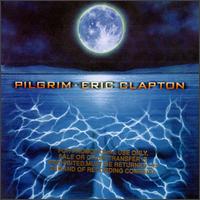 almost entirely on covers and new versions of classic hits; he released no albums of new material between 1989's Journeyman and 1998's Pilgrim. In the decade between the two albums, he had two new hits -- his moving elegy to his deceased son, "Tears in Heaven," and the slick contemporary soul of the Babyface-written "Change the World" -- and Pilgrim tries to reach a middle ground between these two extremes, balancing tortured lyrics with smooth sonic surfaces. Working with producer Simon Climie, his collaborator on the TDF side project, Clapton has created a numbingly calm record that, for all of its lyrical torment, displays no emotion whatsoever. Much of the problem lies in the production, which relies entirely on stiff mechanical drumbeats, gauzy synthesizers, and meandering instrumental interludes. These ingredients could result in a good record, as "Change the World" demonstrated, but not here, due to Pilgrim's monotonous production. Unfortunately, Clapton doesn't want to shake things up -- his singing is startlingly mannered, even on emotionally turbulent numbers like "My Father's Eyes" or "Circus." Even worse, he's content to take a back seat instrumentally, playing slight solos and fills as colorless as the electronic backdrops. The deadened sonics would make Pilgrim a chore even if there were strong songs on the record, but only a handful of tunes break through the murk. Considering that Journeyman, his last album of original material, was a fine workmanlike effort and that From the Cradle and Unplugged crackled with vitality, the blandness of Pilgrim is all the more disappointing.
almost entirely on covers and new versions of classic hits; he released no albums of new material between 1989's Journeyman and 1998's Pilgrim. In the decade between the two albums, he had two new hits -- his moving elegy to his deceased son, "Tears in Heaven," and the slick contemporary soul of the Babyface-written "Change the World" -- and Pilgrim tries to reach a middle ground between these two extremes, balancing tortured lyrics with smooth sonic surfaces. Working with producer Simon Climie, his collaborator on the TDF side project, Clapton has created a numbingly calm record that, for all of its lyrical torment, displays no emotion whatsoever. Much of the problem lies in the production, which relies entirely on stiff mechanical drumbeats, gauzy synthesizers, and meandering instrumental interludes. These ingredients could result in a good record, as "Change the World" demonstrated, but not here, due to Pilgrim's monotonous production. Unfortunately, Clapton doesn't want to shake things up -- his singing is startlingly mannered, even on emotionally turbulent numbers like "My Father's Eyes" or "Circus." Even worse, he's content to take a back seat instrumentally, playing slight solos and fills as colorless as the electronic backdrops. The deadened sonics would make Pilgrim a chore even if there were strong songs on the record, but only a handful of tunes break through the murk. Considering that Journeyman, his last album of original material, was a fine workmanlike effort and that From the Cradle and Unplugged crackled with vitality, the blandness of Pilgrim is all the more disappointing.
Subscribe to:
Post Comments (Atom)
Popular Posts of the Week
-
Sade is one those hypnotic singer, I even think she has special powers, once listened to it. You will be a fan forever. "No Ordinary...
-
You remember the guy who made something completely different from pop music but still somehow pop music. His dark, depressing world wouldn...
-
You don't really see that I share a lot of 80s on this blog. I am always so confused by the era, not really implying it's pretenti...
-
Flashback Playlist I enter to this high street shop and it starts playing. No it is not actually "Obsessions" that is playing. It...
-
I feel like I got caught in a erotic relationship with a random person every time I play his song. It even feels like you are lost in Lond...
-
Rammstein - Brachiale Gewalt (1998) Metallica - Master Of Puppets Tour (1986 Bootleg) Iron Maiden (With Paul diAnno) - Phantom Of The Opera ...
-
1-Heartbreak Hotel 2-Don't Be Cruel 3-Hound Dog 4-Love Me Tender 5-Too Much 6-All Shook Up 7-(Let Me Be Your) Teddy Bear 8-Jailhouse Roc...


 Posts
Posts



0 COMMENTS:
Post a Comment