
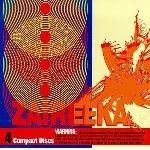
 Flaming Lips frontman Wayne Coyne symbolizing the fusion of anarchy and genius. It's a perfect title; Zaireeka is the culmination of the Lips' helter-skelter brilliance. Pushing the concept of interactive listening into new realms of possibility, the work extends Coyne's infamous "parking lot experiments" into not merely one album, but four separate discs that can be played separately or in groups of two, three, and four with multiple stereos. (Properly synchronized multi-disc playback requires more than one person -- it's literally a party album.) Between combining the discs and toying with volume, balance, fidelity, etc., the options are truly limitless. No two multi-disc performances can be repeated, thanks to the space-time continuum and discrepancies from one CD player to another. Musically as well as conceptually, the Lips are defiantly experimental throughout Zaireeka; individually, each disc sounds more like free jazz than pop, although Coyne's diamond-sharp melodic sensibilities prevail even during the most chaotic moments. With each additional disc, the music's force and ingenuity reveals itself: "Riding to Work in the Year 2025 (Your Invisible Now)" is an epic orchestral noise suite, "Thirty-Five Thousand Feet of Despair" is a multi-narrative plane-crash drama remarkably evocative in its depiction of fear and chaos, and "How Will We Know? (Futuristic Crashendos)" features such extreme high and low frequencies that it can lead to disorientation, confusion, or nausea (the track is not recommended to be played while operating a motor vehicle or in the presence of infants). Logistical nightmares aside, Zaireeka is a dense, difficult work, recommended only for the hardiest Flaming Lips fetishists; however, they're in for the musical experience of a lifetime.
Saturday, February 11, 2006
The Flaming Lips - Zaireeka (1997)
A combination of the words "Zaire" and "Eureka," Zaireeka is a term coined by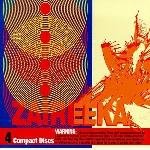 Flaming Lips frontman Wayne Coyne symbolizing the fusion of anarchy and genius. It's a perfect title; Zaireeka is the culmination of the Lips' helter-skelter brilliance. Pushing the concept of interactive listening into new realms of possibility, the work extends Coyne's infamous "parking lot experiments" into not merely one album, but four separate discs that can be played separately or in groups of two, three, and four with multiple stereos. (Properly synchronized multi-disc playback requires more than one person -- it's literally a party album.) Between combining the discs and toying with volume, balance, fidelity, etc., the options are truly limitless. No two multi-disc performances can be repeated, thanks to the space-time continuum and discrepancies from one CD player to another. Musically as well as conceptually, the Lips are defiantly experimental throughout Zaireeka; individually, each disc sounds more like free jazz than pop, although Coyne's diamond-sharp melodic sensibilities prevail even during the most chaotic moments. With each additional disc, the music's force and ingenuity reveals itself: "Riding to Work in the Year 2025 (Your Invisible Now)" is an epic orchestral noise suite, "Thirty-Five Thousand Feet of Despair" is a multi-narrative plane-crash drama remarkably evocative in its depiction of fear and chaos, and "How Will We Know? (Futuristic Crashendos)" features such extreme high and low frequencies that it can lead to disorientation, confusion, or nausea (the track is not recommended to be played while operating a motor vehicle or in the presence of infants). Logistical nightmares aside, Zaireeka is a dense, difficult work, recommended only for the hardiest Flaming Lips fetishists; however, they're in for the musical experience of a lifetime.
Flaming Lips frontman Wayne Coyne symbolizing the fusion of anarchy and genius. It's a perfect title; Zaireeka is the culmination of the Lips' helter-skelter brilliance. Pushing the concept of interactive listening into new realms of possibility, the work extends Coyne's infamous "parking lot experiments" into not merely one album, but four separate discs that can be played separately or in groups of two, three, and four with multiple stereos. (Properly synchronized multi-disc playback requires more than one person -- it's literally a party album.) Between combining the discs and toying with volume, balance, fidelity, etc., the options are truly limitless. No two multi-disc performances can be repeated, thanks to the space-time continuum and discrepancies from one CD player to another. Musically as well as conceptually, the Lips are defiantly experimental throughout Zaireeka; individually, each disc sounds more like free jazz than pop, although Coyne's diamond-sharp melodic sensibilities prevail even during the most chaotic moments. With each additional disc, the music's force and ingenuity reveals itself: "Riding to Work in the Year 2025 (Your Invisible Now)" is an epic orchestral noise suite, "Thirty-Five Thousand Feet of Despair" is a multi-narrative plane-crash drama remarkably evocative in its depiction of fear and chaos, and "How Will We Know? (Futuristic Crashendos)" features such extreme high and low frequencies that it can lead to disorientation, confusion, or nausea (the track is not recommended to be played while operating a motor vehicle or in the presence of infants). Logistical nightmares aside, Zaireeka is a dense, difficult work, recommended only for the hardiest Flaming Lips fetishists; however, they're in for the musical experience of a lifetime.
Subscribe to:
Post Comments (Atom)
Popular Posts of the Week
-
 La Roux - I'm Not Your Toy The Veronicas - 4 Ever Chris Daughtry - What About Now Tinchy Stryder - You're Not Alone Naturi ...
 -
History They originally called themselves The Reactionaries , with additional band member and singer Martin Tamburovich. According to Watt, ...
-
Nightwish is a Finnish musical band formed in 1996 in the town of Kitee. Nightwish compo ses songs that are often classified as either symp...
-
In the Court of the Crimson King is the title of a 1969 album by the British progressive rock group King Crimson. The album opens with a...
-
"You Only Live Once" - 3:09 "Juicebox" - 3:17 "Heart in a Cage" - 3:27 "Razorblade" - 3:29 "On...
-
In an attempt to make Muddy more sellable to his newly-found White audience, Chess lumbered him with Hendrix-influenced psychedelic blues a...
-
The hard rock rawness of Buffalo's Goo Goo Dolls makes Superstar Car Wash an album that is high on amicable guitar riffs and attractive...


 Posts
Posts



2 COMMENTS:
thank you so much, cant wait to listen to this!
h**p://www.sexuploader.com/?d=6M633GBR
Disc: 1
1. Okay I'll Admit That I Really Don't Understand
2. Riding To Work In The Year 2025 (Youre Invisible Now)
3. Thirty-Five Thousand Feet Of Despair
4. A Machine In India
5. The Train Runs Over The Camel But Is Derailed By The Gnat
6. How Will We Know? (Futuristic Crashendos)
7. March Of The Rotten Vegetables
8. The Big Ol' Bug Is The New Baby Now
Disc: 2
1. Okay I'll Admit That I Really Don't Understand
2. Riding To Work In The Year 2025 (Youre Invisible Now)
3. Thirty-Five Thousand Feet Of Despair
4. A Machine In India
5. The Train Runs Over The Camel But Is Derailed By The Gnat
6. How Will We Know? (Futuristic Crashendos)
7. March Of The Rotten Vegetables
8. The Big Ol' Bug Is The New Baby Now
Disc: 3
1. Okay I'll Admit That I Really Don't Understand
2. Riding To Work In The Year 2025 (Youre Invisible Now)
3. Thirty-Five Thousand Feet Of Despair
4. A Machine In India
5. The Train Runs Over The Camel But Is Derailed By The Gnat
6. How Will We Know? (Futuristic Crashendos)
7. March Of The Rotten Vegetables
8. The Big Ol' Bug Is The New Baby Now
Disc: 4
1. Okay I'll Admit That I Really Don't Understand
2. Riding To Work In The Year 2025 (Youre Invisible Now)
3. Thirty-Five Thousand Feet Of Despair
4. A Machine In India
5. The Train Runs Over The Camel But Is Derailed By The Gnat
6. How Will We Know? (Futuristic Crashendos)
7. March Of The Rotten Vegetables
8. The Big Ol' Bug Is The New Baby Now
Post a Comment