
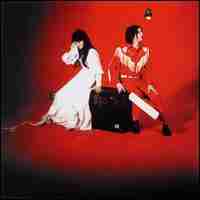
 fame the White Stripes had received up to the point of its release, but, paradoxically, it made full-fledged rock stars out of Jack and Meg White and sold over half a million copies in the process. Despite the White Stripes' ambivalence, fame nevertheless seems to suit them: They just become more accomplished as the attention paid to them increases. Elephant captures this contradiction within the Stripes and their music; it's the first album they've recorded for a major label, and it sounds even more pissed-off, paranoid, and stunning than its predecessor. Darker and more difficult than White Blood Cells, the album offers nothing as immediately crowd-pleasing or sweet as "Fell in Love With a Girl" or "We're Going to Be Friends," but it's more consistent, exploring disillusionment and rejection with razor-sharp focus. Chip-on-the-shoulder anthems like the breathtaking opener, "Seven Nation Army," which is driven by Meg White's explosively minimal drumming, and "The Hardest Button to Button," in which Jack White snarls "Now we're a family!" -- one of the best oblique threats since Black Francis sneered "It's educational!" all those years ago -- deliver some of the fiercest blues-punk of the White Stripes' career. "There's No Home for You Here" sets a girl's walking papers to a melody reminiscent of "Dead Leaves and the Dirty Ground" (though the result is more sequel than rehash), driving the point home with a wall of layered, Queen-ly harmonies and piercing guitars, while the inspired version of "I Just Don't Know What to Do With Myself" goes from plaintive to angry in just over a minute, though the charging guitars at the end sound perversely triumphant. At its bruised heart, Elephant portrays love as a power struggle, with chivalry and innocence usually losing out to the power of seduction. "I Want to Be the Boy" tries, unsuccessfully, to charm a girl's mother; "You've Got Her in Your Pocket," a deceptively gentle ballad, reveals the darker side of the Stripes' vulnerability, blurring the line between caring for someone and owning them with some fittingly fluid songwriting.
Friday, March 31, 2006
The White Stripes - Elephant
White Blood Cells may have been a reaction to the amount of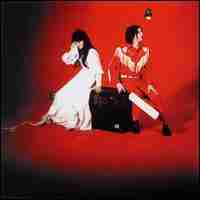 fame the White Stripes had received up to the point of its release, but, paradoxically, it made full-fledged rock stars out of Jack and Meg White and sold over half a million copies in the process. Despite the White Stripes' ambivalence, fame nevertheless seems to suit them: They just become more accomplished as the attention paid to them increases. Elephant captures this contradiction within the Stripes and their music; it's the first album they've recorded for a major label, and it sounds even more pissed-off, paranoid, and stunning than its predecessor. Darker and more difficult than White Blood Cells, the album offers nothing as immediately crowd-pleasing or sweet as "Fell in Love With a Girl" or "We're Going to Be Friends," but it's more consistent, exploring disillusionment and rejection with razor-sharp focus. Chip-on-the-shoulder anthems like the breathtaking opener, "Seven Nation Army," which is driven by Meg White's explosively minimal drumming, and "The Hardest Button to Button," in which Jack White snarls "Now we're a family!" -- one of the best oblique threats since Black Francis sneered "It's educational!" all those years ago -- deliver some of the fiercest blues-punk of the White Stripes' career. "There's No Home for You Here" sets a girl's walking papers to a melody reminiscent of "Dead Leaves and the Dirty Ground" (though the result is more sequel than rehash), driving the point home with a wall of layered, Queen-ly harmonies and piercing guitars, while the inspired version of "I Just Don't Know What to Do With Myself" goes from plaintive to angry in just over a minute, though the charging guitars at the end sound perversely triumphant. At its bruised heart, Elephant portrays love as a power struggle, with chivalry and innocence usually losing out to the power of seduction. "I Want to Be the Boy" tries, unsuccessfully, to charm a girl's mother; "You've Got Her in Your Pocket," a deceptively gentle ballad, reveals the darker side of the Stripes' vulnerability, blurring the line between caring for someone and owning them with some fittingly fluid songwriting.
fame the White Stripes had received up to the point of its release, but, paradoxically, it made full-fledged rock stars out of Jack and Meg White and sold over half a million copies in the process. Despite the White Stripes' ambivalence, fame nevertheless seems to suit them: They just become more accomplished as the attention paid to them increases. Elephant captures this contradiction within the Stripes and their music; it's the first album they've recorded for a major label, and it sounds even more pissed-off, paranoid, and stunning than its predecessor. Darker and more difficult than White Blood Cells, the album offers nothing as immediately crowd-pleasing or sweet as "Fell in Love With a Girl" or "We're Going to Be Friends," but it's more consistent, exploring disillusionment and rejection with razor-sharp focus. Chip-on-the-shoulder anthems like the breathtaking opener, "Seven Nation Army," which is driven by Meg White's explosively minimal drumming, and "The Hardest Button to Button," in which Jack White snarls "Now we're a family!" -- one of the best oblique threats since Black Francis sneered "It's educational!" all those years ago -- deliver some of the fiercest blues-punk of the White Stripes' career. "There's No Home for You Here" sets a girl's walking papers to a melody reminiscent of "Dead Leaves and the Dirty Ground" (though the result is more sequel than rehash), driving the point home with a wall of layered, Queen-ly harmonies and piercing guitars, while the inspired version of "I Just Don't Know What to Do With Myself" goes from plaintive to angry in just over a minute, though the charging guitars at the end sound perversely triumphant. At its bruised heart, Elephant portrays love as a power struggle, with chivalry and innocence usually losing out to the power of seduction. "I Want to Be the Boy" tries, unsuccessfully, to charm a girl's mother; "You've Got Her in Your Pocket," a deceptively gentle ballad, reveals the darker side of the Stripes' vulnerability, blurring the line between caring for someone and owning them with some fittingly fluid songwriting.
Subscribe to:
Post Comments (Atom)
Popular Posts of the Week
-
 New bands and albums held off for one day, this post devoted to Edwyn. Best known for his tenure fronting the Scottish pop revivalists Ora...
 -
Calexico is an indie rock band known for playing an eclectic variety of music. Its two main members are Joey Burns and John Convertino, wh...
-
Duran Duran are all image and no content Nick Rhodes: “Because we came over with a certain fl amboyancyin the initial stages, a lot of peopl...
-
Rating:10/10 Modern Music Review Robyn Hitchcock is one of England's most enduring contemporary singer/songwriters and live performers, ...
-
Parachutes is the debut album by English rock band Coldplay , released on July 10, 2000. It quickly shot to number one in the United Kingd...
-
Then Play On is the fourth album by blues rock band Fleetwood Mac, first released in September 1969 (see 1969 in music). It is often consi...


 Posts
Posts



4 COMMENTS:
What is the password? Thanks!
Does it ask a pass?I think it doesn't
the first link is the file undergroundkicks2.rar and it needs a pass. Thanks again.
ok I fixed it sorry about wrong link.:(
Post a Comment